

Powerful ideas are amazingly flexible.
I enjoyed many years in the advertising business as a creative director. Creativity is much talked about today in the broader world outside of advertising, thanks to the popularity of design thinking, which transfers many of the tools and thought processes originating in the advertising and design fields into the disciplines of business strategy, technology innovation, and process improvement, among many others.
Creative thinking in any discipline does not happen in a vacuum, and one of the more common ingredients in the mix is a limited budget, often combined with its twin dread, limited time.
Years ago, the late Dallas illustrator, author, and book collector George Toomer coined a phrase that stuck with me. He said, “Beware of clients who operate on a shoestring because it is usually your shoestring.”
Many in the advertising, marketing, and PR fields struggle to establish the credibility and recognition necessary to be compensated at a level commensurate with other professional services. Design thinkers in other fields may be similarly starved by shortsighted organizations. Continue reading “Creativity on a Shoestring Budget”
 Co-written by David Wenger and Dave Shaw in 2003. Still relevant today.
 Let’s consider a popular consumer brand choice you’ve likely thought about. Is the iPhone or the Android better for you? At the time this was written there were more than 97 million results on Google for that question, with lots of data points to consider. Which platform has the most advanced multitasking capacity? Which has better applications? You likely have a list of logical reasons in your head why one or the other is the best choice.
 What is the true cost of your company’s product? Behind the simple economic analysis of materials, labor, marketing, and distribution lurks the more complicated question of your brand’s social and environmental impact. Does your brand kill polar bears, and if so how does that fact impact your reputation?
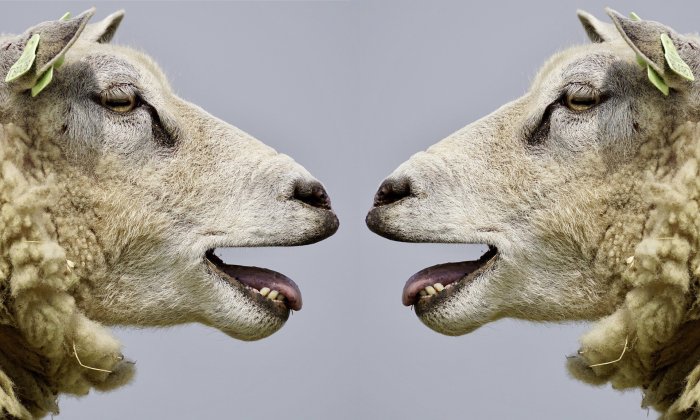 Brands are often perceived in human-like terms. You would think most brand communicators would realize this, but it is surprising how often sales organizations exhibit the worst instincts of human behavior as they search for sales messages with consumer appeal.


 The name Pony Sheet came from the old story about the young girl whose parents took her out to the barn on her birthday and announced, “We have a big birthday surprise for you.” Opening the door, she spied a huge pile of horse manure in the middle of the floor, a rather disappointing sight. Yet being a young optimist (most children are), the lass clapped her hands with joy. “With that much horse manure,” she exclaimed, “there must be a pony in here somewhere.”